
Outlay for infra is also expected to see a significant increase in view of the government's Rs 111-trillion investment plan under the national infrastructure pipeline to develop social and economic infrastructure over five years.
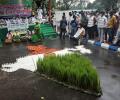
Though the Bills of Punjab and Rajasthan have a lot of similarities, the one approved by the Chhattisgarh Assembly is structurally different. None of the three has tried to address a key demand of the agitating farmers in full, which is to make all payments below the MSP, within and outside mandis, illegal.

A closer look at the data reveals that a lot of the items are not part of this calculation. The notable ones include buffalo meat, marine exports, raw cotton, and plantation crops such as tea, coffee, rubber, etc.
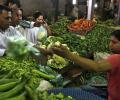
'If you see the composition of items which are causing this spike in prices, most of them have little to do with the kharif harvest, except for pulses and vegetables to some extent.' 'I don't know on what basis the government is claiming that food prices will moderate in the weeks to come.'
'It is entering growth territory on a month-on-month basis.'

The government, under the Finance Act, 2020, had allowed tax exemption for SWFs and pension funds in the case of incomes from investment in 34 key infrastructure sectors, including hotels, cold chains, educational institutions, hospitals, and gas pipelines.
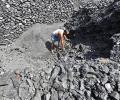
This is the first time India is offering coalmines to private companies for commercial sale.
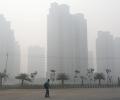
In December 2016, the Supreme Court directed the central government to have a graded action plan to tackle the menace of air pollution. There are two plans - Comprehensive Action Plan and Graded Response Action Plan.

Thomas Isaac has been in and out of the national news in his role as Kerala's finance minister since 2018 for various path-breaking tax initiatives. But it is 2020 that he has become more prominent, principally in the GST council.

The reforms will help FPOs procure directly from farmers, something that they have been pressing for long.

When the Centre tries to encroach upon the subjects that are under the prerogative of the state, or where the centre tries to evade from any responsibility guaranteed to a state through a constitutional provision/obligation, it poses a threat to federalism.
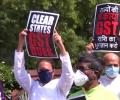
Dissenting states including Chhattisgarh and Kerala, have made it clear they are in no mood to relent. They want the Centre to borrow the entire Rs 2.35 trillion this fiscal citing bleak fiscal position.
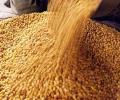
Chana is majorly imported from Australia and Tanzania and it attracts an import duty of 60 per cent. A section of the traders is demanding a reduction in import duty to around 35-40 per cent to tide over any shortage of the commodity as the new crop will start hitting the market only around mid-February.
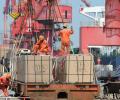
Exports to China saw sustained double-digit growth for the fourth straight month in August, led by eightfold rise in iron and steel shipments.
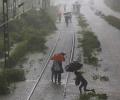
This year, the monsoon was above normal in almost all parts, except in North-West India, which comprises the major grain producing states of Uttar Pradesh, Punjab, Haryana, Rajasthan, along with states such as Himachal Pradesh, the NCR, Uttarakhand, and J&K.
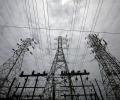
Growth in power demand remains in negative though it is picking up as coronavirus-related restrictions are eased.
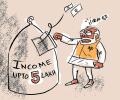
Any additions in demand made by a tax officer under the faceless assessment process for over Rs 5 lakh of income will undergo a rigorous review process before a final demand order is passed.

Data shows that the current system of decentralised marketing and centralised procurement helps Punjab and Haryana farmers the most, while its efficacy in other states has been poor. Experts and farm leaders say success of the laws rests heavily on implementation.
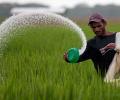
The government's main rate setting panel suggested that this be done in two tranches of Rs 2,500 each in the kharif and rabi seasons.
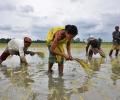
Foodgrains production in 2020-21 is projected to be a record 144.52 million tonnes, which is 0.80 per cent more than the production in 2019-20.
 © 2025 Rediff.com - Investor Information - Advertise with us - Disclaimer - Privacy Policy - Sitemap - Feedback - About us - Terms of use - Grievances